The Kintsugi Tablecloth
Acknowledging the imperfection of life

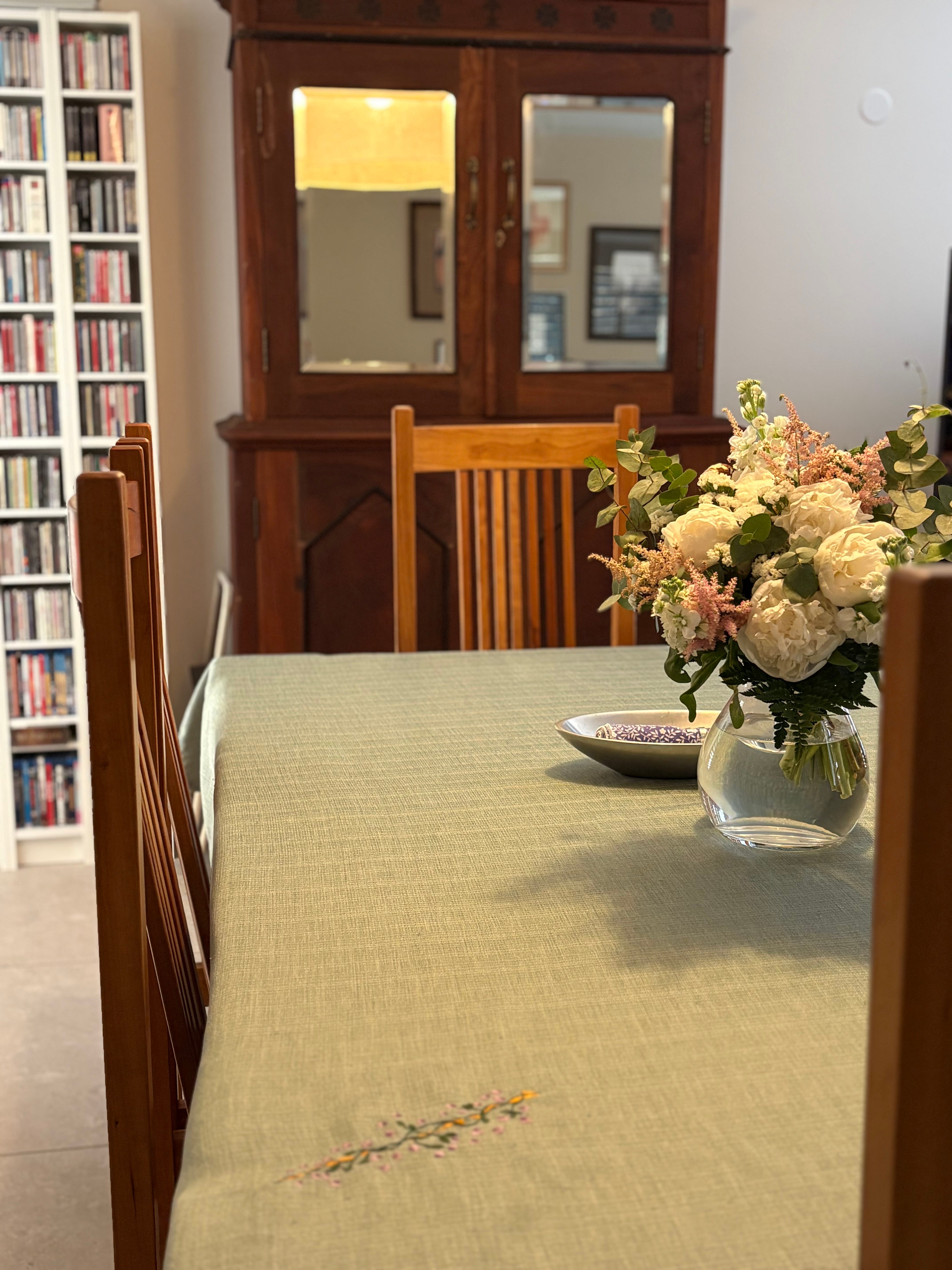
A few weeks ago, an Unfortunate Event with an X-Acto Knife occurred in this house, resulting in an 8-inch cut in a tablecloth. Not a huge deal; it wasn’t expensive, but it was my favorite of three everyday tablecloths we own. I sewed up the rip by hand so we could keep using the tablecloth.
However, the tear was impossible to repair invisibly, and because it was near a corner, I couldn’t hid it with a strategically placed vase. Honestly, it looked awful.
One evening at dinner, Patrick said, “You know those repairs they do to Japanese pottery with the gold?”
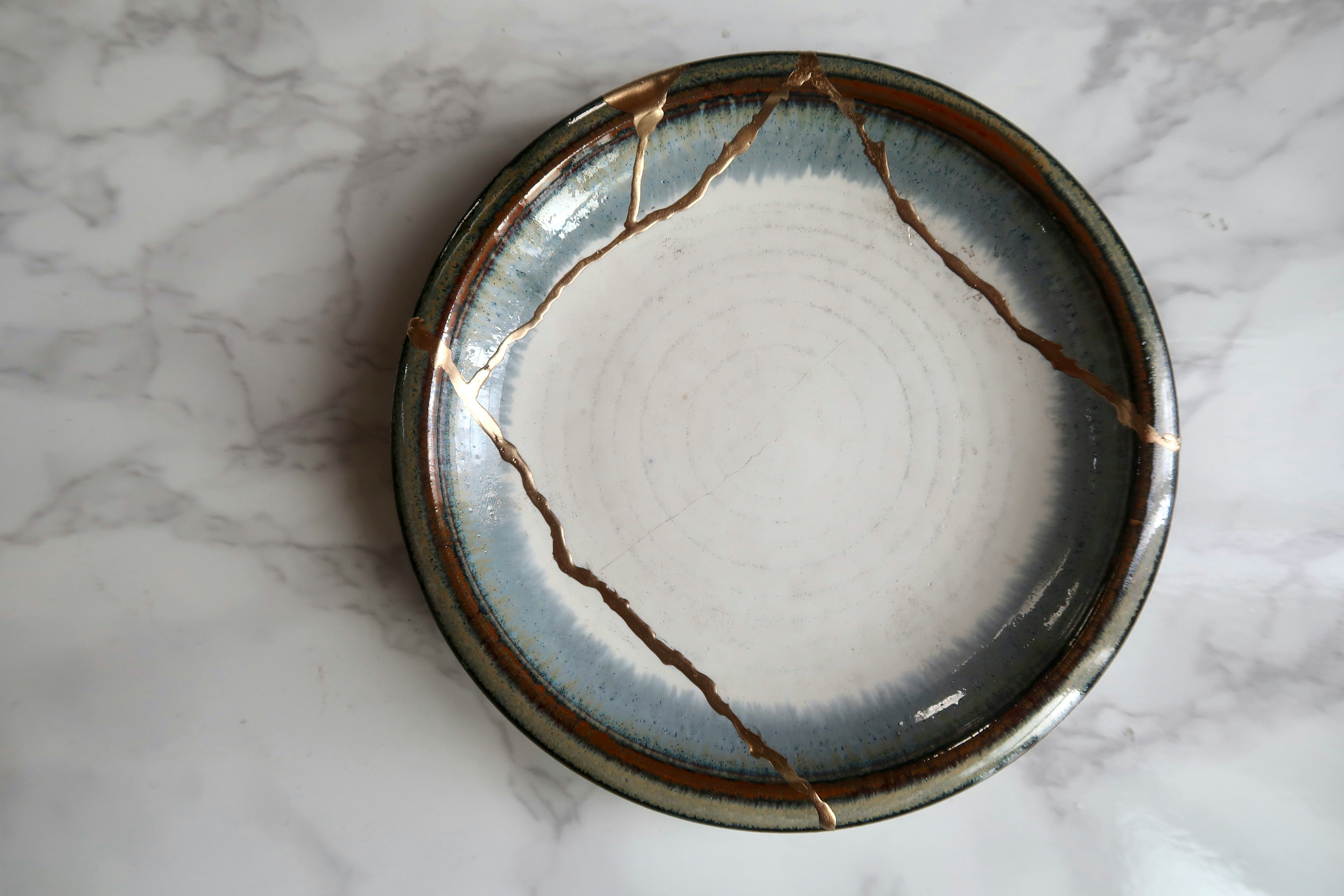
“Kintsugi?” I asked. “Yes, it’s very cool. Why?”
“Maybe you could embroider that seam, if you felt like it.” he suggested. “Make it look intentional.”
I agreed that this was an intriguing burst of inspiration on his part; embroidery certainly couldn’t make it look any worse. So the next day, I washed the tablecloth, got out my box of embroidery floss, and started doodling.
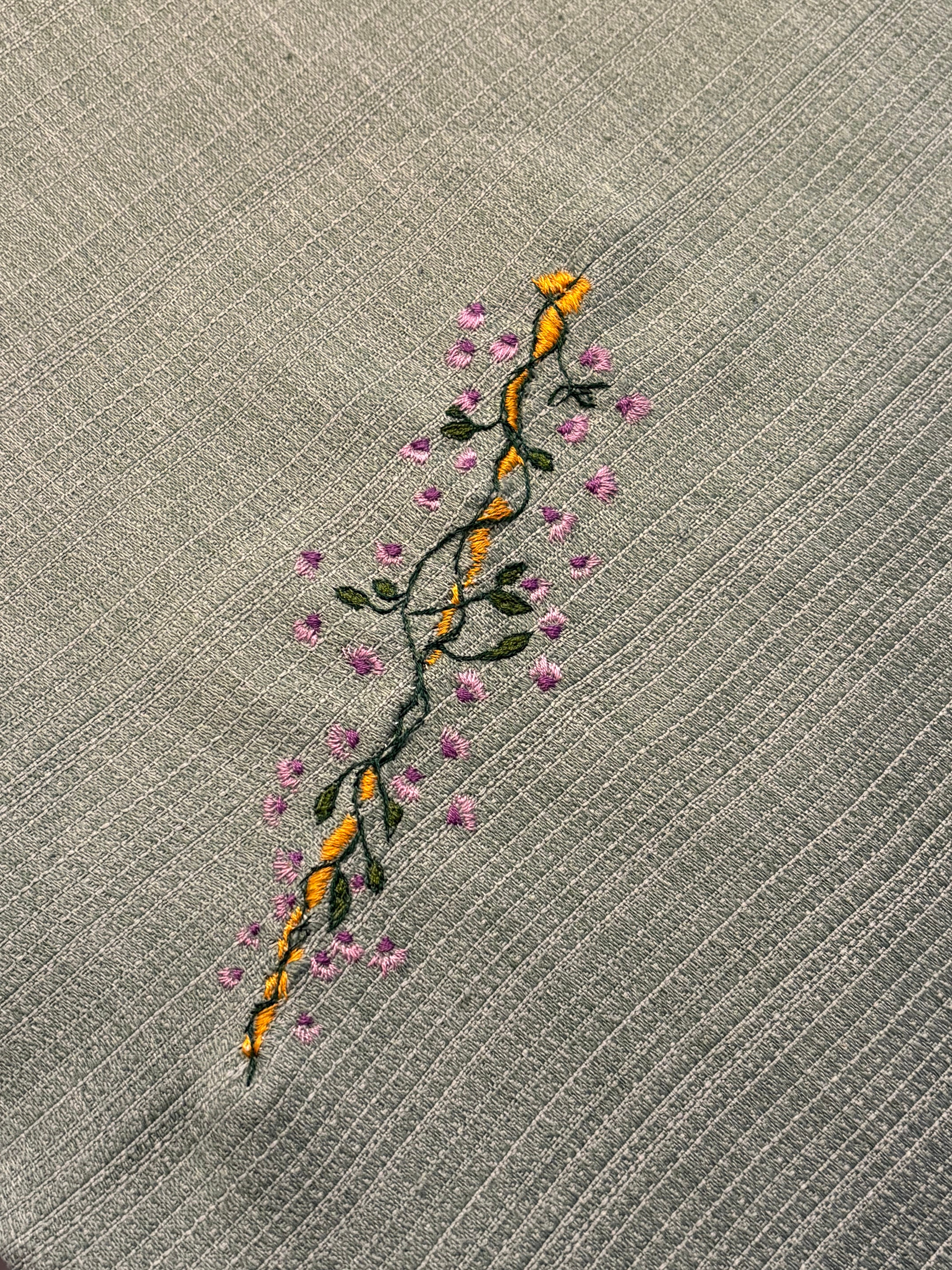
I finished the doodle last night, and I’m very happy with the result. I added the gold last. When I stretched the cloth with my embroidery hoop, the stitches of my original seam (made with ordinary white sewing thread) started to show. I worried the seam wouldn’t hold under further tension, and the gaps with uneven white stitches looked hideous. My solution, the rather random gold satin stitch along the middle, both reinforced the seam and covered it up—a double win that harks back to Patrick’s original idea.
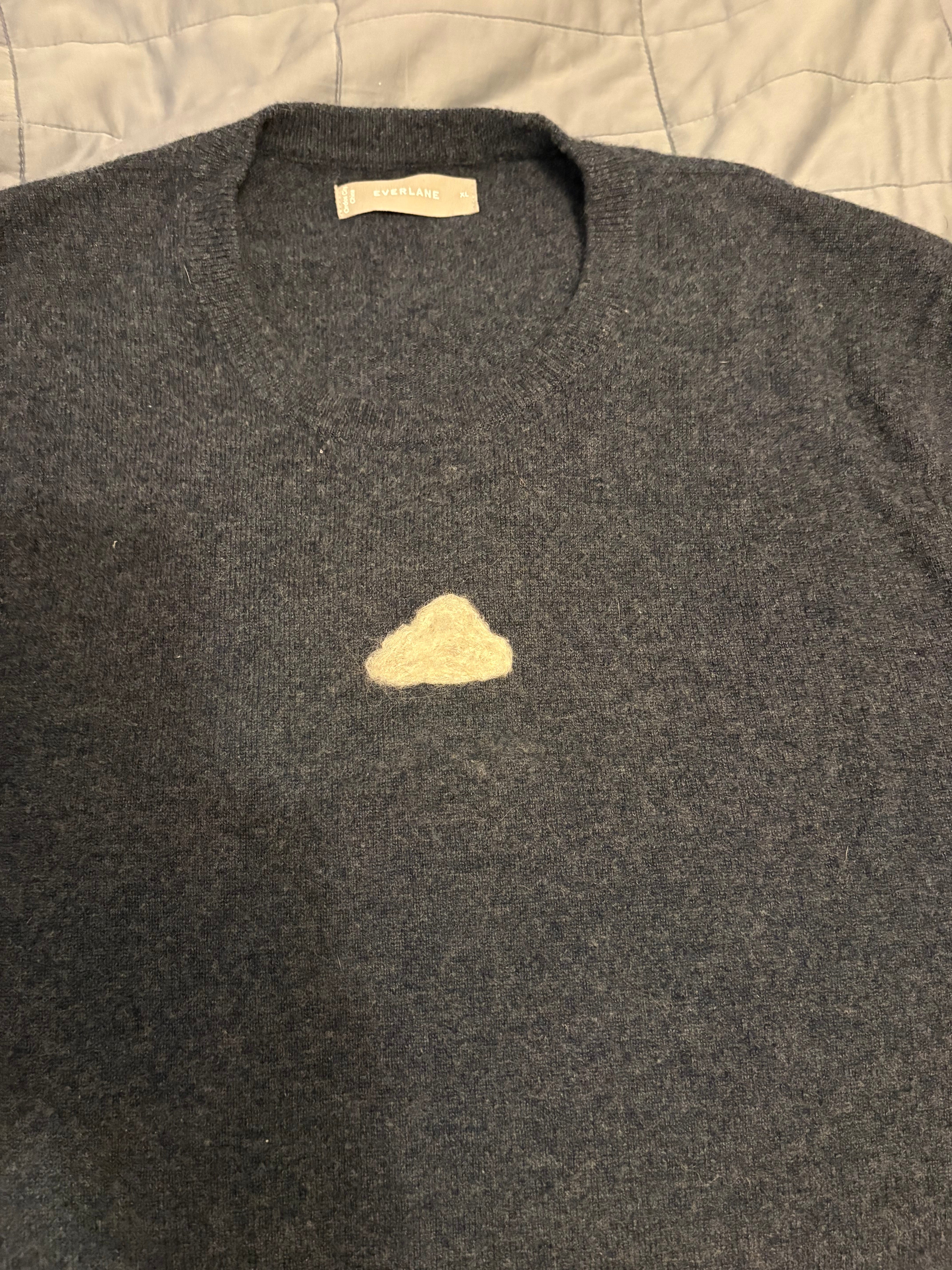
A few years ago, my friend Colleen got into mending moth holes in sweaters with needle felting. In a brilliant barter, I traded her a couple of pints of homemade ice cream for the mending of two sweaters—which turned out beautifully—but then I wanted to try the felting as well. Unfortunately, our closet was suffering an ongoing plague of moths at the time, so I had plenty of material to practice on. Patrick’s cloud sweater was my most successful result. Kind of kintsugi, actually.
Kintsugi acknowledges that flawlessness is an illusion and newness isn’t maintainable. It’s related to the Japanese philosophy of wabi-sabi, which embraces imperfection and transience. Search for “visible mending” on Pinterest and you’ll have to wade through a ton of AI slop to see a slew of ingenious ideas for preserving the viability of an item while also celebrating its use and wear. Going forward, I plan to look for ways to incorporate kintsugi both in my wardrobe and around the house.
And then I thought about my aging body. When my mother died last year at age 78 from complications of preventable health issues, I was all the more motivated to exercise, eat and sleep well, and pay attention to boring necessities like sunscreen and dental cleanings. I hope to live for at least another 30 years, and I want those years to be as happy and active as possible.
However, all of us—women especially—get sucked into the trap of chasing perfection and trying to preserve youthfulness. An obscene amount of money has been made by luring us into these pursuits—diets, cosmetics, supplements, subscriptions, programs, light machines, sound machines, and on and on.
Look, I don’t begrudge anyone a treatment or protocol that genuinely makes them feel better about themselves. And I’m going to keep using my fantastic face cream and doing my daily yoga. But the next time I feel tempted to spend money and time to hang onto what honestly left the room a long time ago, I’m going to smile, deepening those crow’s feet around my eyes just a little more. Kintsugi!

Lovely embroidery and such a excellent way of extending the tablecloth’s life. I very much enjoyed reading your post. Thank you!